
Willow
Designing a financial coaching experience centered around trust, clarity, and emotional support. Helping women navigate financial uncertainty through personalized coaching journeys tailored to life stages and goals.

Overview
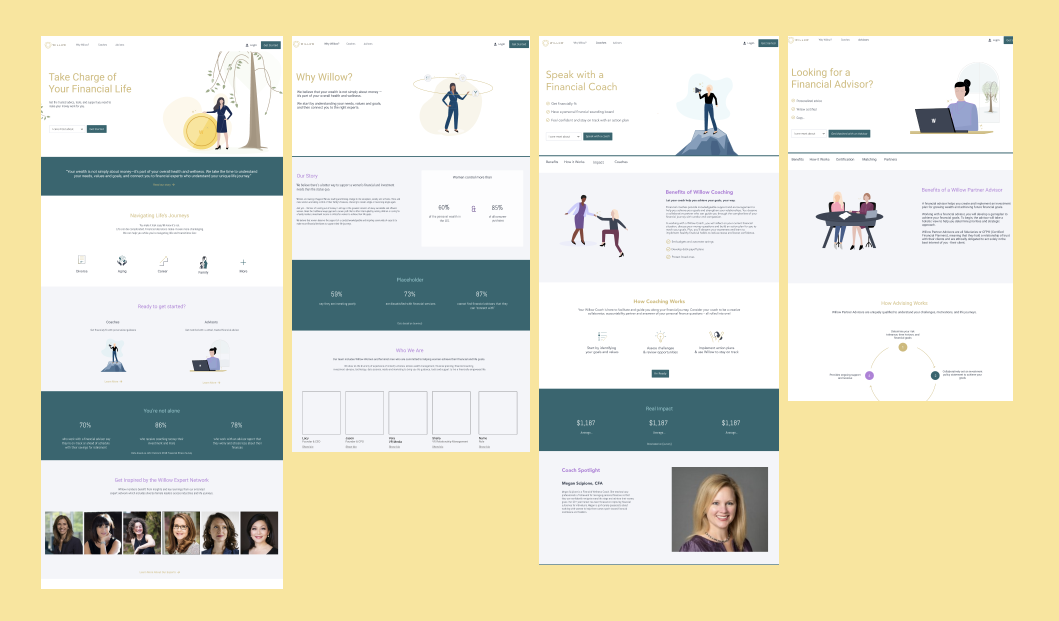
Willow was an early-stage financial technology startup focused on empowering women through financial coaching. Create experiences for both customers and coaches, including onboarding, dashboards, coaching tools, worksheets, and the marketing website.
Problem
Women often felt dismissed, overwhelmed, or unsupported when seeking financial guidance.
Financial terminology felt intimidating
Coaching roles were unclear
Existing experiences lacked empathy and emotional support
The challenge was to create a platform that felt approachable, trustworthy, and encouraging.

Research and Discovery
Research Methods
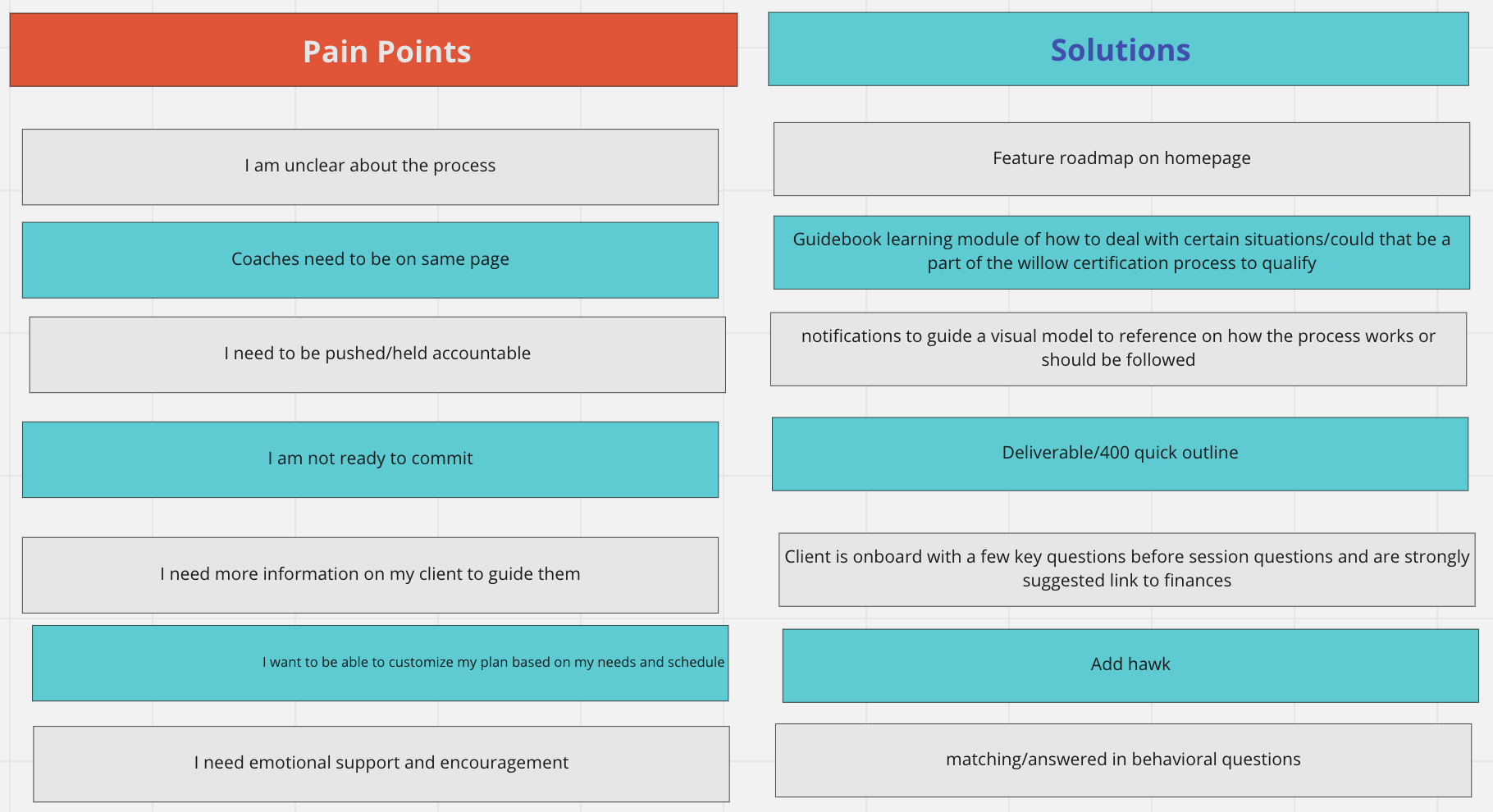
Affinity mapping
User interviews
Prototype testing
Key Findings
80% of participants had negative associations with financial advisors
Women described feeling dismissed or underestimated
Users wanted support tailored to their specific life stages
Many struggled to understand the difference between coaches, planners, and advisors
User Voices
“I feel intimidated to ask questions about finances”
“My husband handled the finances now i am not sure where to start”
“The financial language is confusing”
“I want to feel cared for and empowered”
Key Finding
Women weren’t just looking for financial education—they were looking for reassurance, emotional support, and guidance tailored to their life experiences.
Users wanted:
someone they could relate to
a clear roadmap
visibility into what progress could look like
Design Strategy
To reduce intimidation and improve trust three areas of focus were prioritized.
Build emotional trust
Human-centered language
Clear expectations
Supportive onboarding
Clarify coaching pathways
Simplify coaching terminology
Explain coaching differences
Support informed decisions
Visualize progress
Create life-stage roadmaps
Show outcomes before commitment
Reduce uncertainty in the process
Addressing Coaching Confusion
Users struggled to understand the differences between coaches, planners, and advisors.
To address this, I designed a comparison grid that clarified:
coaching focus
support style
benefits provided

Life-Stage Roadmap
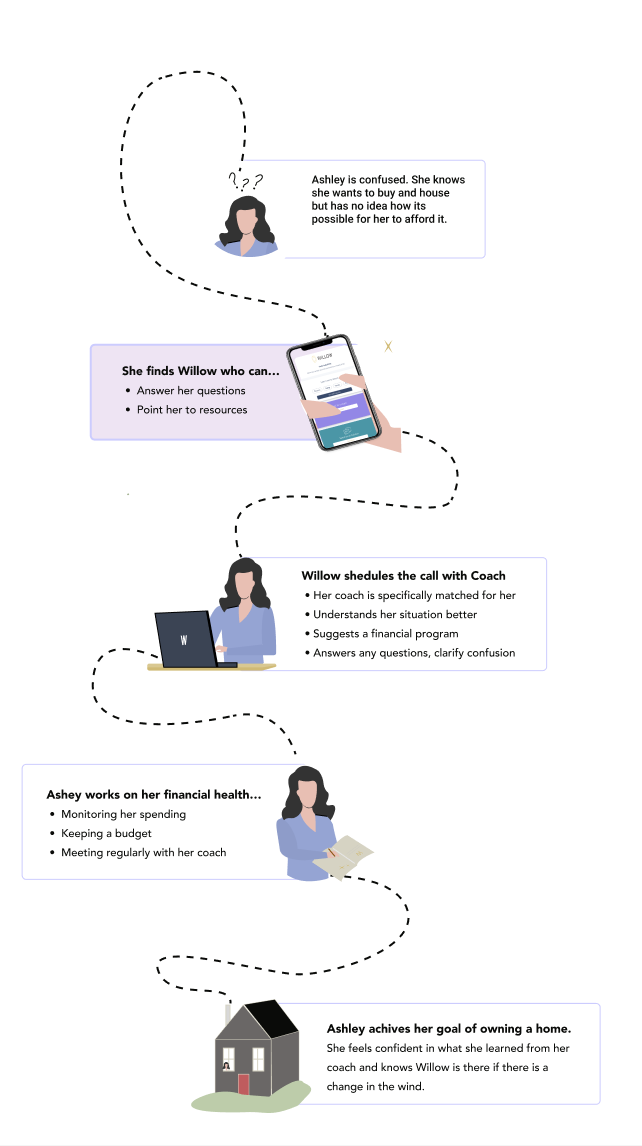
The roadmap experience became the core of the platform strategy.
Instead of asking users to commit immediately, the experience introduced:
relatable life stages
guided steps
visible outcomes
This helped users better understand how coaching could support their goals before committing.
Iteration process
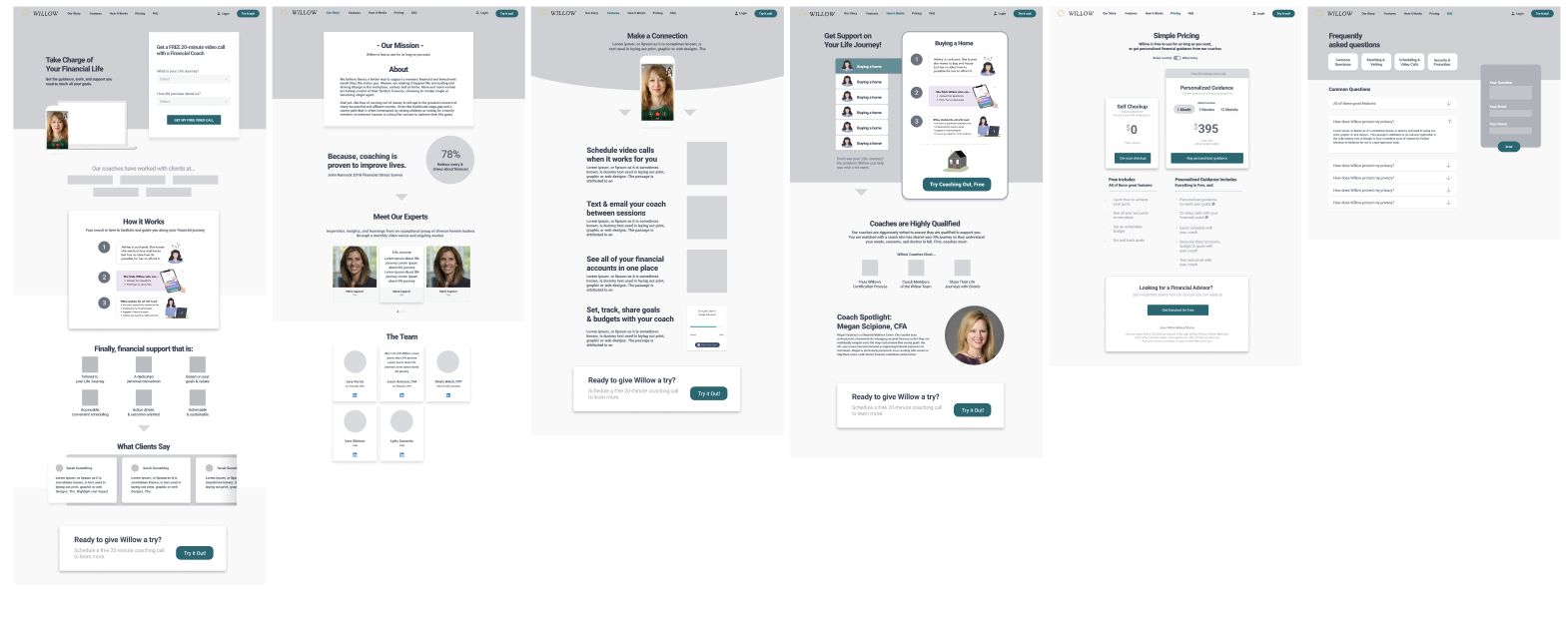
Multiple iterations explored how to balance clarity, emotional engagement, and implementation feasibility.
Too technically complex
Final Direction
Balanced attainability, variety, and clarity for launch
Too many steps → overwhelming
Improved structure but lacked representation variety
Outcome
While the custom website experience was ultimately replaced with a WordPress template to support a faster startup launch, the project established key UX foundations around:
trust-building
emotional support
financial clarity
This experience reinforced the importance of adaptability and prioritization within early-stage product environments.
Next Steps
Expand roadmap personalization
Continue testing coaching terminology
Refine onboarding for emotional reassurance